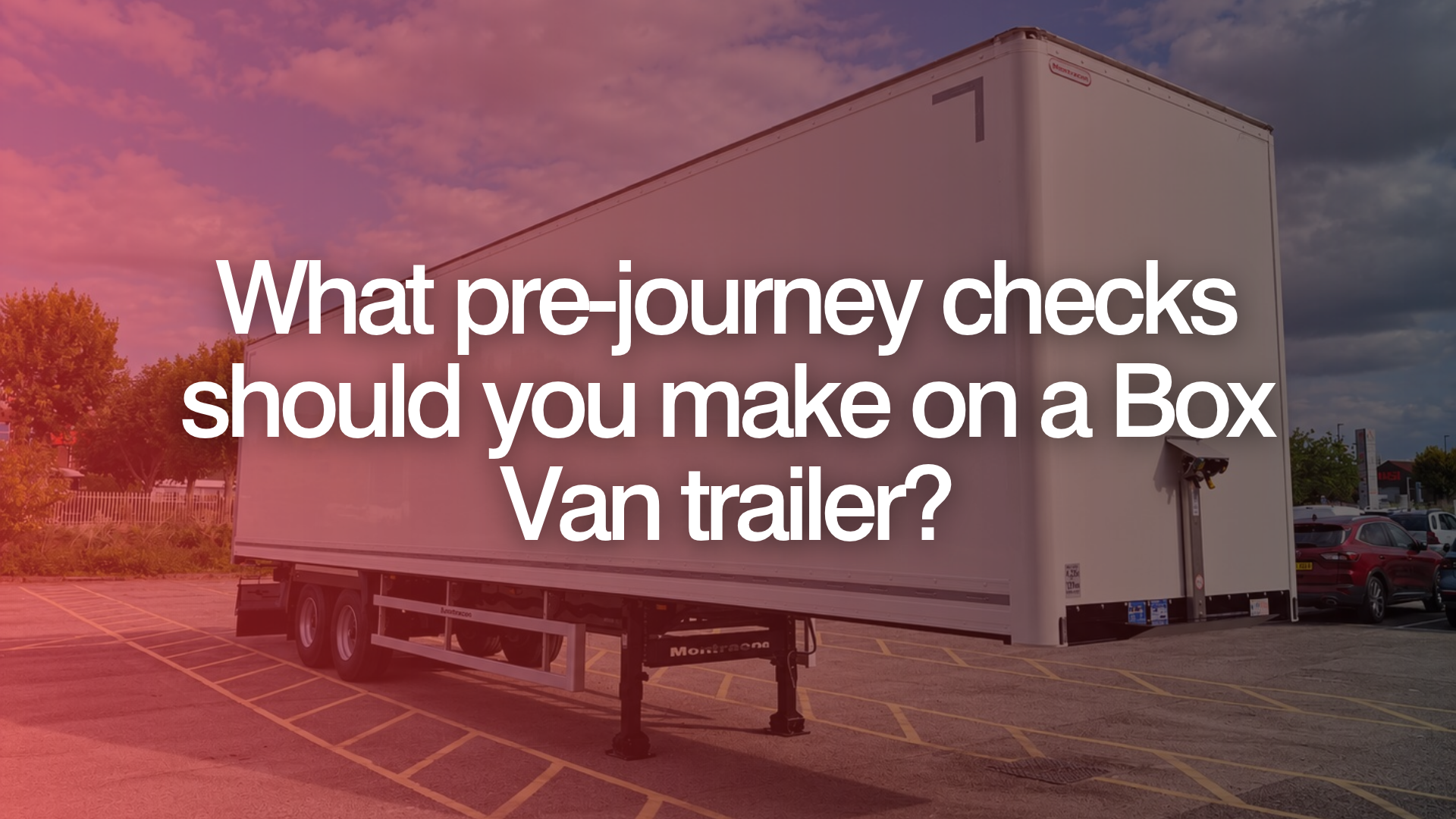
A few minutes spent checking a Box Van trailer before setting off can identify problems before they become much bigger issues on the road.
For drivers, a pre-journey walkaround is an important part of making sure the trailer is safe and ready for use. It also gives you an opportunity to spot defects early and report anything that needs attention before the journey begins.
From tyres and lights to doors, load security and braking equipment, here are some of the key areas to consider when checking your commercial Box Van trailer.
Note: This list of considerations are only recommendations and do not replace the traffic commissioner’s guidance.
1. Check the trailer connection
Start by checking that the trailer is correctly coupled to the tractor unit.
- Fifth wheel and kingpin: Make sure the fifth-wheel coupling is properly engaged and secured, and check the trailer connections for any obvious signs of damage or incorrect connection.
- Air and electrical lines: Suzi cables and air hoses should be properly connected and positioned so they are not at risk of being stretched, trapped or damaged during operation.
- Landing legs: Ensure the landing legs are fully raised and safely secured before moving the trailer.
2. Inspect the tyres and wheels
Tyres work hard on any commercial trailer, making their condition a vital part of the pre-journey check.
- Tyre condition: Inspect each tyre for obvious damage, including cuts, bulges or excessive wear, and check that tyre pressures are appropriate for the load.
- Wheels and wheel nuts: Check for missing or visibly loose wheel nuts and, where wheel nut indicators are fitted, make sure they remain correctly aligned.
Any visible damage or anything that doesn’t look right should be reported before setting off.
3. Check the lights and reflectors
Trailer lighting is essential for making the vehicle visible and communicating clearly with other road users.
- Light functionality: Check that the indicators, hazard lights, brake lights, tail lights, reversing lights, rear fog lights, number plate illumination and relevant side and outline marker lights are all working correctly.
- Lenses and reflectors: Lights, lenses, reflectors and reflective markings should be clean, secure and free from obvious damage that could affect their effectiveness.
4. Check the doors and body
Box Van doors need to remain properly secured throughout the journey to protect the load and ensure road safety.
- Doors and catches: Check rear and any side doors to make sure hinges, locking bars, handles and safety catches are operating correctly. All doors should be fully closed and secured before the trailer moves.
- Bodywork: Walk around the trailer and look for obvious signs of external damage to the body, roof or underrun protection.
- Door seals: Check door seals for visible damage or deterioration, particularly where keeping the load protected from the weather is important.
5. Check the load is secure
What is happening inside the Box Van matters just as much as what you can see on the outside.
- Load restraint: Loads should be positioned and secured appropriately for the journey using suitable load restraint equipment available within the trailer, such as lashing straps, internal tracking or shoring poles.
- Load distribution: Check that nothing has moved or could shift during transit. Make sure the load is appropriately distributed and that maximum trailer and individual axle weight limits are not exceeded. Poorly positioned loads can affect vehicle handling and stability.
6. Check the braking system
The trailer braking system should be checked before entering public roads.
- Air connections and leaks: Make sure the relevant air lines and braking connections are correctly attached and listen for any obvious signs of air leaks.
- Parking brake: The trailer parking brake should operate correctly, holding the trailer securely when applied and releasing fully when required.
If a problem is identified with the braking system, it should be reported and addressed before the trailer enters service.
Small checks can identify bigger problems
A good pre-journey inspection should be systematic rather than rushed.
Connections → Tyres and wheels → Lights → Doors and body → Load security → Brakes
Working through the trailer in the same order each time helps drivers build a consistent routine and reduces the chance of something being overlooked.
If a defect is found, report it through the appropriate fleet management process and make sure any issue affecting roadworthiness is dealt with before the trailer is driven.
Pre-journey checks also work alongside regular trailer inspection, maintenance and servicing. Daily walkarounds help identify what is happening with the trailer now, while planned maintenance helps keep on top of its condition over the longer term.
For fleet operators, both are important parts of keeping commercial trailers working safely and reliably.
Need support with your Montracon Box Van trailers?
Our Parts, Warranty and Aftersales teams are here to help with replacement parts, technical guidance and ongoing trailer support. Contact our team to find out more.