For years, discussions about improving transport efficiency have focused on engines, fuel prices and driver behaviour.
Today, another question is becoming increasingly important.
How much does the trailer weigh?
As operators look for ways to reduce operating costs, improve fuel efficiency and lower emissions, lightweight trailer design is moving higher up the agenda. What was once considered a specialist requirement is now becoming part of everyday fleet planning.
The question isn’t whether lightweight trailers have a place in modern transport.
It’s whether businesses can afford to ignore them.
Every kilogram matters
A trailer carries more than freight.
It also carries its own weight.
The heavier the trailer, the more energy is needed to move it. While that might seem insignificant over a single journey, the impact becomes much more noticeable across thousands of miles and hundreds of deliveries.
Reducing trailer weight creates opportunities that extend far beyond the trailer itself.
It can allow operators to:
- Increase available payload
- Improve fuel efficiency
- Reduce operating costs
- Lower carbon emissions
- Improve overall fleet efficiency
For businesses working with tight margins, even relatively small gains can deliver meaningful long-term savings.
More payload without increasing fleet size
For many operators, payload is one of the most valuable assets they have.
If a trailer can legally carry more product without exceeding weight limits, every journey becomes more productive.
That doesn’t necessarily mean carrying heavier loads every day.
It means giving operators greater flexibility when the opportunity arises.
Over the course of a year, that additional capacity can improve productivity without increasing the number of vehicles on the road.
Fuel efficiency isn't just about the truck
Fuel remains one of the largest operating costs for most transport businesses.
Modern tractor units have become increasingly efficient, but the trailer also has an important role to play.
A lighter trailer requires less energy to move, helping reduce fuel consumption across its working life. While the savings from a single journey may appear modest, they become much more significant when multiplied across an entire fleet.
Improving fuel efficiency isn’t usually about one major change.
It’s often the result of many smaller improvements working together.
Sustainability starts with smarter engineering
Much of the conversation around sustainable transport focuses on electric vehicles, alternative fuels and charging infrastructure.
Those developments are important, but sustainability can also be achieved through better engineering.
Designing trailers that use materials more efficiently, reduce unnecessary weight and remain in service for longer all contribute towards lowering environmental impact.
A trailer that delivers reliable performance for many years while reducing fuel consumption supports both commercial and environmental goals.
Lightweight doesn't mean compromising on strength
One of the biggest misconceptions about lightweight trailers is that reducing weight means reducing durability.
Modern trailer engineering proves otherwise.
Advances in manufacturing techniques, material selection and chassis design allow weight to be reduced without sacrificing the strength needed for demanding daily operations.
The challenge isn’t simply making a trailer lighter.
It’s making it lighter while maintaining the quality, durability and reliability operators expect.
Engineering with the future in mind
As transport continues to evolve, trailer manufacturers are also rethinking traditional designs.
Modular construction, improved aerodynamics, smarter material selection and more efficient manufacturing processes are helping create trailers that are lighter, stronger and better suited to the demands of modern logistics.
These developments aren’t about following trends.
They’re about helping operators prepare for the future while improving performance today.
Lightweight engineering in practice
Lightweight design only delivers value if it works in the real world.
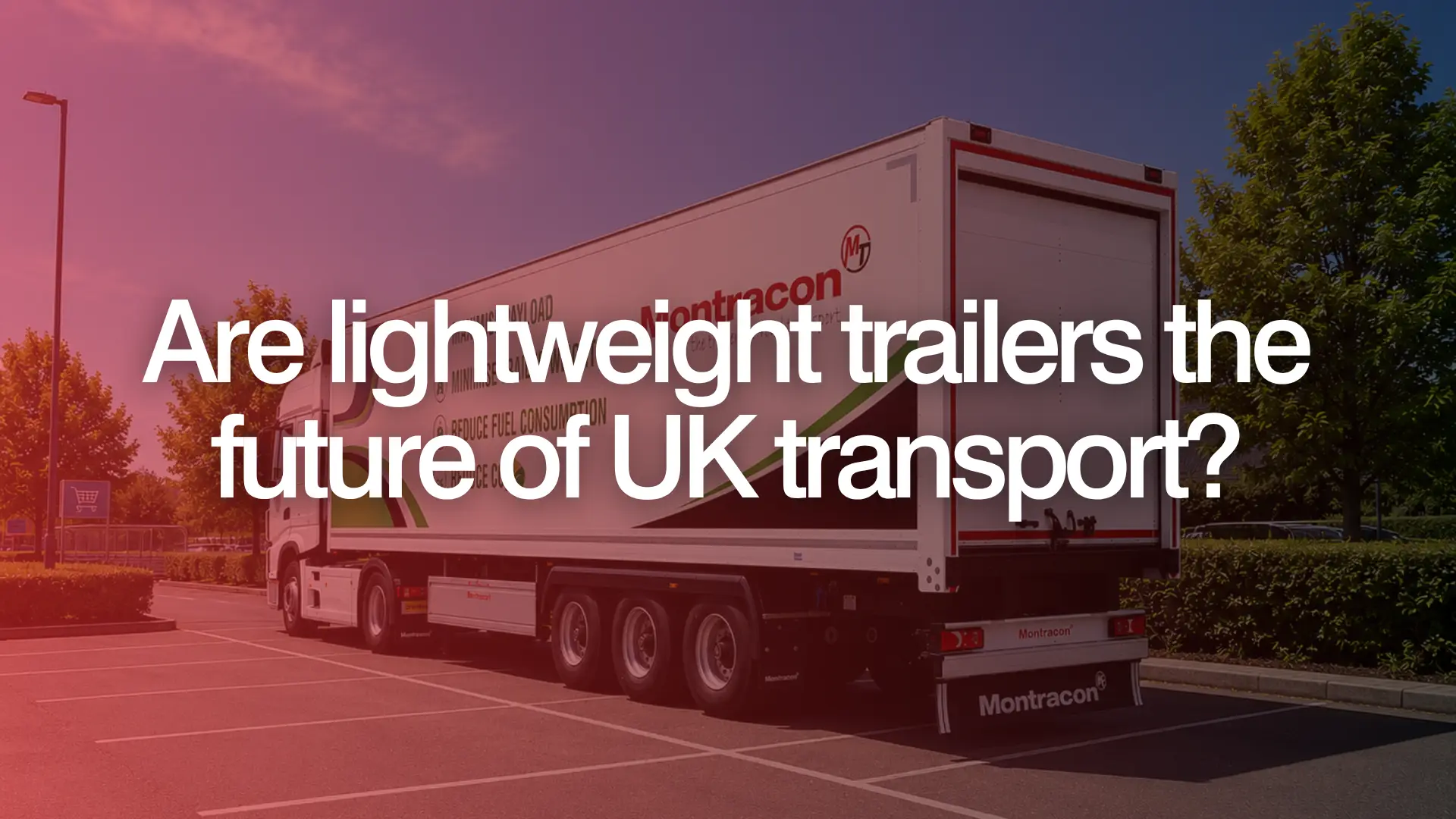
Montracon’s Lightweight Box Van was developed to help operators maximise payload while reducing overall trailer weight. Rather than focusing on weight reduction alone, the design brings together a new chassis, modular construction and engineering refinements that support fuel efficiency, lower emissions and long-term durability.
The result is a trailer that reflects changing industry priorities without compromising the qualities operators rely on every day.
The future is about working smarter
Transport has always evolved.
Vehicles become more efficient.
Technology becomes more capable.
Operators continually look for ways to improve productivity while controlling costs.
Trailer design is no different.
Lightweight engineering is becoming an increasingly important part of that journey because it helps address several challenges at once: payload, fuel efficiency, emissions and whole-life operating costs.
The future of UK transport won’t be shaped by a single innovation.
It will come from thousands of smarter engineering decisions that, together, make fleets more efficient, more sustainable and better prepared for whatever comes next.
If you’re exploring ways to improve fleet efficiency or would like to learn more about lightweight trailer design, the Montracon team is always happy to help.
Call: 01302 732500
Email: sa***@*******on.com
Visit: montracon.com